
Sale!




Original price was: $79.97.$55.98Current price is: $55.98.
- Quality that lasts, prices that don't.
- Experience the difference quality makes.
- Satisfaction Guaranteed
- 100% High Quality Guarantee

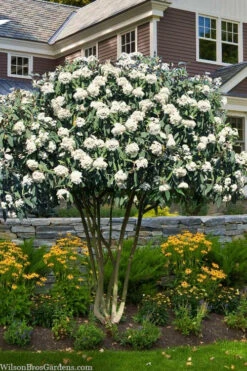
Leatherleaf Evergreen Viburnum
Viburnum rhytidophyllum
Plant Details
USDA Plant Hardiness Zones: 4a-8b Find Your Zone
Plant Type: Evergreen to Semi-Deciduous Flowering Shrub or Small Tree
Height at Maturity: 8-10′
Width at Maturity: 8-10′
Spacing: 7-8′ apart for solid hedge; 14’+ apart for space between plants.
Growth Habit / Form: Multi-stemmed, Upright Rounded
Growth Rate: Moderate to Fast
Flower Color: Creamy White flower
Flower Size: Small flowers in 3-6″ rounded clusters
Flowering Period: Spring
Flower Type: Single, in clusters
Fragrant Flowers: Slight
Foliage Color: Dark Green to Blue-Green
Fragrant Foliage: No
Berry Color: Red maturing to Black
Sun Needs: Full to Mostly Sun, Morning Sun With Afternoon Shade, Morning Shade with Afternoon Sun. All Day Filtered Sun
Water Needs: Moist to Average
Soil Type: Clay, Loam, Sandy, Silty
Soil Moisture / Drainage: Moist But Well Drained
Soil pH: 5.0 – 7.5 (Acid to Neutral)
Maintenance / Care: Low
Attracts: Birds, Butterflies, Beneficial Pollinators, Visual Attention,
Resistances: Deer (moderate resistance), Disease, Moderate Drought (when established), Heat, Insect, Air Pollution
Description
An oldie but goodie that has stood the test of time since it was introduced in 1900, the Leatherleaf Viburnum provides 4-season beauty as a shrub or small tree. Viburnums rank among our favorites of all flowering shrubs and for many reasons this one sits near the top of our favorites list. Perhaps the best feature is its handsome, luscious, evergreen to semi-evergreen foliage. The long, dark blue-green leaves are thick and leathery with crinkled veins turning to a deep burgundy-purple during winter. In mild climates the leaves are evergreen. In cold climates they usually hang on the plant until January or so but are quickly replaced in early spring with fresh new growth. Mid to late spring brings abundant clusters of showy white flowers that sit atop the foliage for easy access to butterflies and beneficial pollinators. Following the flowers are equally abundant clusters of showy, oval-shaped, vibrant red berries the birds will appreciate. At 8 to 10 feet tall and equally as wide, leatherleaf Viburnum is a great choice for a natural hedge or specimen. As it grows taller, lower branches can be removed to form a highly attractive small tree perfect for use as a specimen in landscape borders or home foundation plantings. Very easy to grow in most any well-drained soil and plenty of sun. You might be happy to know the deer turn their nose up to it and we’ve seen no pest or disease problems.
Fruit set will be greater if Leatherleaf Viburnum is cross-pollinated with other cultivars. Good pollinators for Leatherleaf are Alleghany, Prague, Willowwood, Conoy, Chesapeake or Eskimo.
Landscape & Garden Uses
Growing 8 to 10 feet tall and equally as wide at maturity, the Leatherleaf Viburnum can be grown as a large shrub or lower branches can be removed to form a very attractive small tree. Either way, it is an eye-catching specimen or natural hedge in landscape and flowering shrub borders. Also useful as an accent tree or to frame corners of homes or other buildings, or as espalier (trained to grow flat against a wall) in home foundation plantings. A fine addition to white theme gardens, bird gardens, wildlife gardens, Viburnum gardens, and cottage gardens.
Suggested Spacing: 7 to 8 feet apart for solid hedge; 16 feet or more apart for space between plants.
Growing Preferences
Leatherleaf Viburnum is very easy to grow in most any moist but well drained soil of average fertility and full sun to part shade. It prefers a loamy soil rich in organic matter. As with so many other ornamental plants it does not like constantly soggy or wet conditions. It is quite drought tolerant when established and we’ve seen no serious pest or disease problems. Deer haven’t touched it in our gardens. For best flowering, at least 5 hours of direct sunlight per day is suggested. Responds very well to pruning for shaping, size control and tree forming. Prune as needed immediately after flowering.
Helpful Articles
Click on the link below to find helpful advice from our experts on how to plant, prune, fertilize and water Viburnums.
How To Plant And Care For Viburnum Plants
Plant Long & Prosper!
Meet The Wilson Brothers & Staff
Questions? Contact Us
Be the first to review “Leatherleaf Evergreen Viburnum – 3 Gallon Pot”
Related products
Sale!
Original price was: $199.97.$95.99Current price is: $95.99.
Sale!
Original price was: $169.97.$98.99Current price is: $98.99.
Sale!

Original price was: $158.85.$98.99Current price is: $98.99.
Sale!

Original price was: $44.97.$31.48Current price is: $31.48.
Sale!
Original price was: $229.97.$95.99Current price is: $95.99.
Sale!

Original price was: $149.97.$97.99Current price is: $97.99.
Sale!
Original price was: $149.97.$98.99Current price is: $98.99.
Sale!

Original price was: $64.85.$45.40Current price is: $45.40.
Reviews
There are no reviews yet.