
Sale!
Original price was: $43.97.$30.78Current price is: $30.78.
- Quality that lasts, prices that don't.
- Experience the difference quality makes.
- Satisfaction Guaranteed
- 100% High Quality Guarantee

Lucky Find Arborvitae
Thuja plicata ‘Lucky Find’
Other Common Names: Western Arborvitae, Western Red Cedar
Plant Details
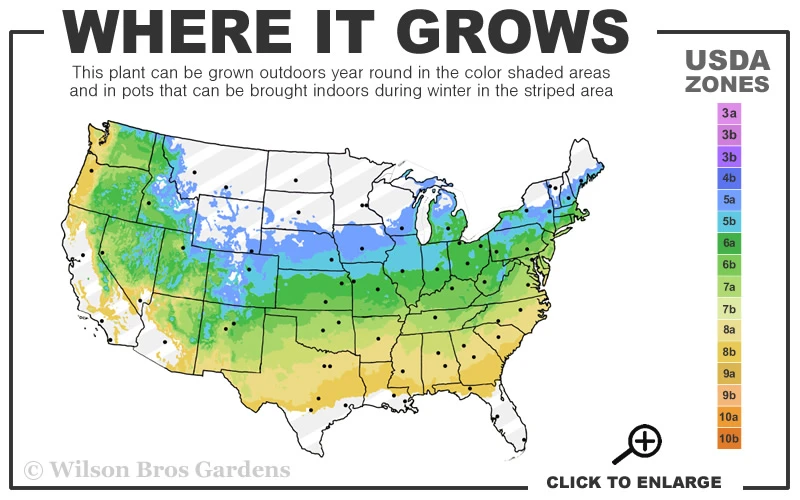
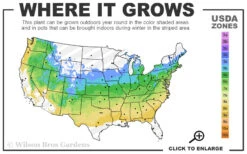
USDA Plant Hardiness Zones: 5a-8b Find Your Zone
Plant Type: Coniferous Evergreen Shrub
Height at Maturity: 15-20′
Width at Maturity: 10-15′ at base
Habit/Form: Upright, Pyramidal, Pendulous
Growth Rate: Slow to Moderate, 6-10″ per year
Flower Color: –
Flower Size: –
Flowering Period: –
Flower Type: –
Fragrant Flowers: –
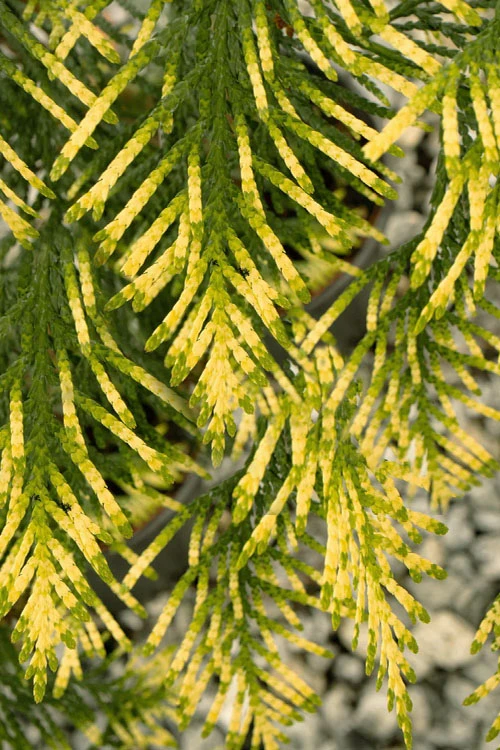
Foliage Color: Variegated, Green foliage with Yellow tips, Purplish winter foliage with Yellow tips
Fragrant Foliage: Yes, scented
Sun Needs: Full Sun or Mostly Sun, Morning Sun with Dappled or Afternoon Shade, Morning Shade with Evening Sun; Afternoon Filtered Sun in climates with hot and dry summers
Water Needs: Average
Soil Type: Clay (well-draining), Loam, Sandy, Silt
Soil Moisture / Drainage: Moist But Well Drained
Soil pH: 6.5-8.0
Maintenance / Care: Low
Attracts: Birds, Visual Attention
Resistances: Cold Temperatures (-20F / Zones 3-8), Deer – more info, Disease, Insect
Description
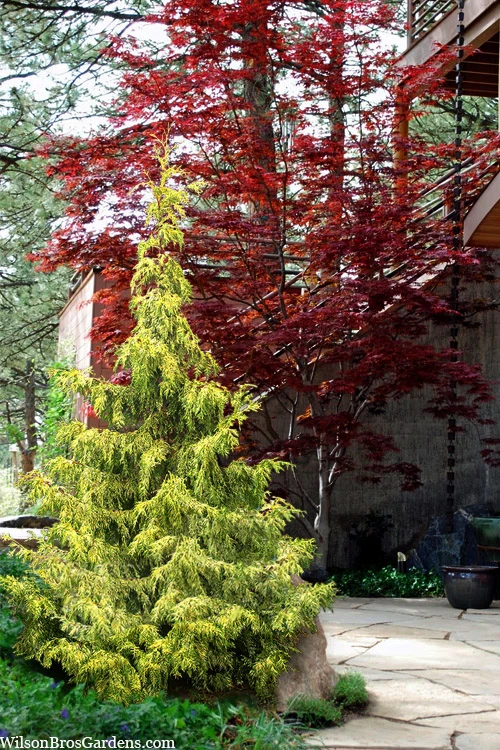
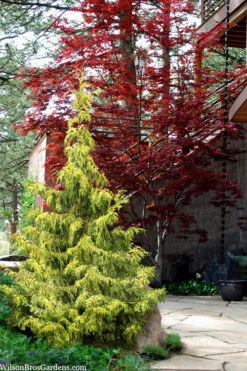
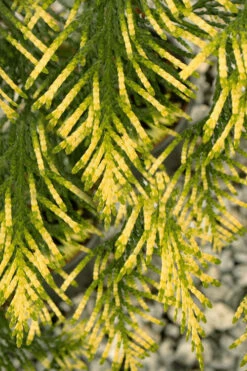
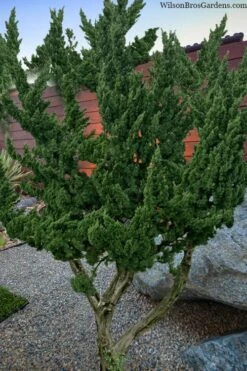
A rare and distinctive North American native, the Lucky Find Arborvitae, also known as Western Red Cedar, is a graceful conifer with an upright pyramidal habit reaching 15 to 20 feet tall and 10 to 15 feet wide at its base over time. Its gracefully sweeping branches are clothed in variegated, rich green foliage sprays tipped in yellow through the spring, turning to a dark purplish color in winter while maintaining the contrasting golden tips. This low-maintenance tree will grow in full sun but prefers some filtered sun or shade during the afternoon in climates with hot and dry summers. Graceful form and beautiful color make Lucky Find a fine choice as an accent or specimen tree, in groupings, or to frame the corners of homes and other buildings.
Note: Though heat tolerant, Western red cedars don’t like the combination of heat and high humidity in the deep South.
Landscape & Garden Uses
Growing 15 to 20 feet tall and 10 to 15 feet wide at its base, the Lucky Find Arborvitae is ideal as a specimen, in groupings, or to frame the corners of homes and buildings or an entrance. It can also be grown in containers and is a fine addition to conifer gardens, rock gardens, yellow-themed gardens, and formal gardens.
Suggested Spacing: 16 feet or more apart for space between trees
Growing Preferences
The Lucky Find Arborvitae is easy to grow and care for in most any moist but well drained soil of average fertility and full to mostly sun for the brightest foliage color. That said, in climates where summers are hot and dry, it will appreciate some filtered sun or shade during the afternoon hours when the sun is most intense. It doesn’t like the combination of heat and humidity, so it isn’t a good choice for the hot and humid deep South. Has moderate drought tolerance when established but prefers consistent moisture, es[especially in drier climates. As with so many other evergreen conifers, it does not like constantly soggy or waterlogged soil. So make sure to choose a well-draining site for planting. Maintenance is minimal with very little if any pruning ever required. That said, it responds well to shearing for a more tight, formal look.
Helpful Articles
Click on a link below to find helpful advice from our experts on planting and caring for Arborvitae shrubs.
How To Plant & Care For Arborvitae Shrubs In The Garden & Pots
How To Plant & Care For Arborvitae Trees
Privacy Screen Design & Planting Tips & Ideas
Plant Long & Prosper!
Meet The Wilson Brothers & Staff
Questions? Contact Us!
Be the first to review “Lucky Find Arborvitae (Thuja Occidentalis) – 1 Gallon Pot”
Related products
Sale!
Original price was: $159.97.$95.99Current price is: $95.99.
Sale!
Original price was: $229.97.$95.99Current price is: $95.99.
Sale!
Original price was: $199.97.$95.99Current price is: $95.99.
Sale!
Original price was: $129.97.$90.98Current price is: $90.98.
Sale!
Original price was: $249.97.$96.99Current price is: $96.99.
Sale!
Original price was: $149.97.$98.99Current price is: $98.99.
Sale!

Original price was: $73.85.$51.70Current price is: $51.70.
Sale!

Original price was: $158.85.$98.99Current price is: $98.99.
Reviews
There are no reviews yet.